
Using a whole chicken: Chicken noodle soup with homemade egg noodles
Tastes of winter are creeping in left and right these days. This week, Denver got its first snow. This was no wimpy little dusting, but at least two inches of wet powder that coated the lawns outside our apartment. Mike discovered it first. I discovered it second when Mike threw a snowball at me as I sleepily emerged from our cozy bedroom. Fall weather has been in full swing for several weeks now, but the first snow takes it to another level. So soup season commences.
Humans have been cooking food for many, many years – probably since the first campfire. Cooked food has a lot of benefits: it’s easier to chew, easier to digest, and can improve flavor. But in the nutrition world, a common question is whether vegetables are more nutrient-dense when they are eaten raw or cooked. The answer? It depends.
Different nutrients react differently to heat. Some nutrients, like vitamin C, are very sensitive and are destroyed quickly when exposed to high temperatures. Others, like antioxidants lycopene and beta carotene, become easier for our bodies to absorb as they’re cooked. According to a study in the Journal of Agriculture and Food Chemistry, heat can break down plant cell walls and make the heat-loving antioxidants and vitamins inside more bioavailable (scientific way of saying “easier for us to absorb and put to good use”).
Some cooking methods, however, are better than others. Gentle steaming is known to help vegetables retain their nutrition and make some vitamins and minerals more absorbable while minimizing the risk of good things being destroyed by high heat. Boiling, on the other hand, has a higher risk of ruining some good nutrients. Have you ever boiled broccoli and found that the cooking water has turned green? Those are nutrients floating around in there. However, you can still get those floating nutrients into your body if you eat some of the cooking liquid (example: soups).
Ultimately, it’s great to include a variety of vegetables in your diet and prepare them in a variety of ways!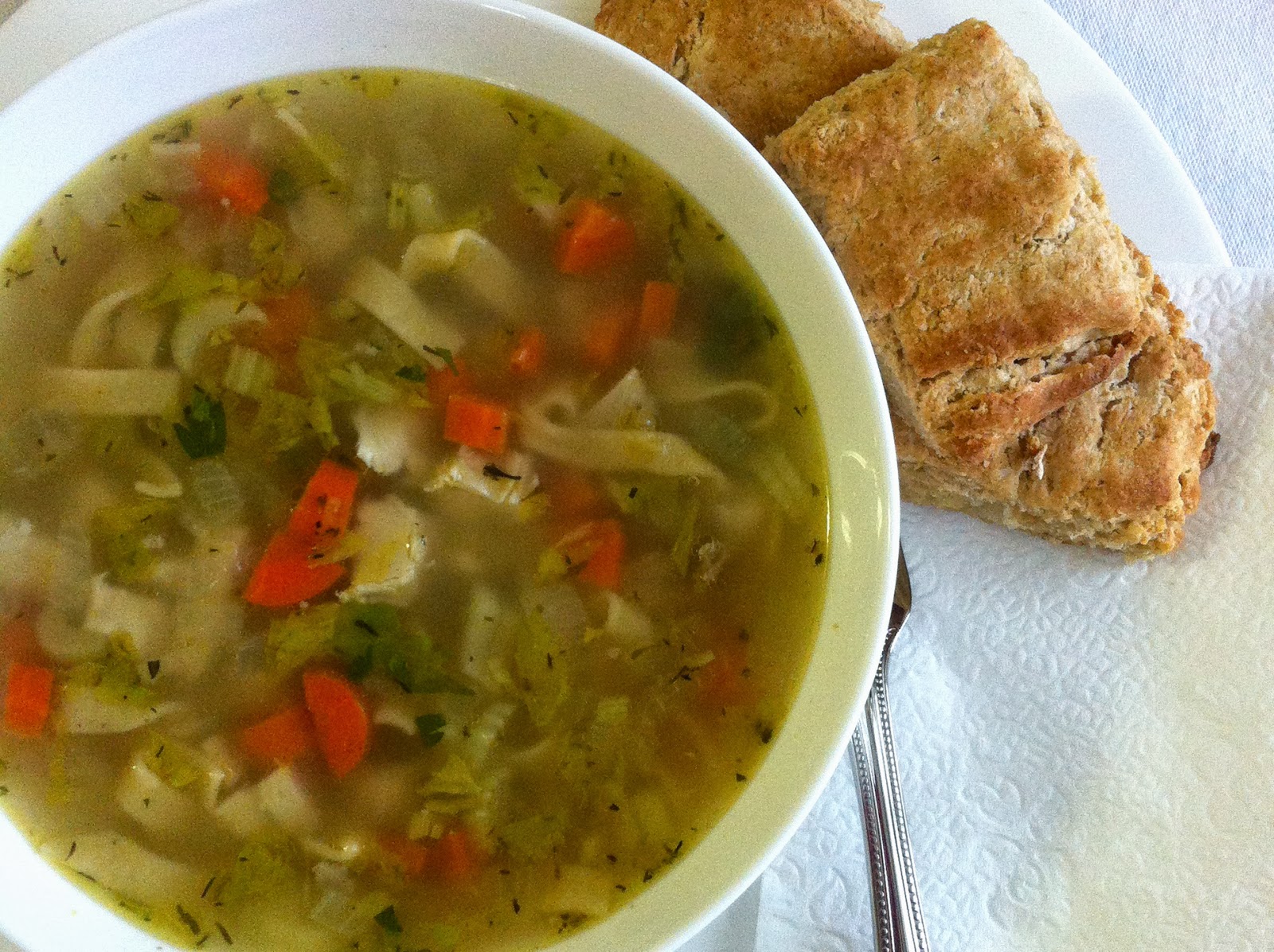
Chicken Noodle Soup
Adapted from Food.com
Serves 4
1 tablespoon olive oil
1 cup diced carrot
1 cup diced inner celery stalks with greens
1/2 of a medium onion, diced
8 cups chicken stock (I used 6 cups homemade chicken stock + 2 cups water)
1 tablespoon chopped flat-leaf Italian parsley
1 teaspoon dried thyme
2 cups chopped cooked chicken
5 ounces (about 3 cups) egg noodles
- Heat the olive oil in a large pot over medium heat. Add the carrot, celery, and onion and cook until softened, about 5 minutes.
- Add the chicken stock, parsley, and thyme. Raise the heat, bringing the soup to a boil, then reduce to a simmer.
- Add the chicken and cook over medium-low heat for 15 minutes. Add the egg noodles and cook an additional 5 minutes. Taste for seasoning – the stock should add saltiness, so extra salt may not be needed. Serve alongside warm whole wheat biscuits.
- Measure the flours into a large bowl. With your hand, make a well in the center of the flour and drop in the egg yolks, whole egg, salt, and 2 tablespoons of the water. Begin mixing the wet ingredients into the dry, adding additional water a little bit at a time until the dough is just able to form a ball.
- Knead the dough for a few minutes to ensure that everything is well-mixed, then wrap with plastic wrap and let it rest for 30 minutes.
- Next, it’s time to make noodles. The easiest way to do this is with a pasta roller, but if you don’t own one, a rolling pin and pizza cutter will work fine. Tear an egg-sized piece of dough from the ball, and re-cover the remaining portion with plastic wrap. Roll the pasta into a long, thin sheet about 6 inches wide and 1/8 inch in thickness.
- Using a pizza cutter or knife, cut the sheet of dough into 4-inch sections (see photos below). Next, cut each 4-inch section into noodles with a pizza cutter or by running through the fettucini cutter on your pasta roller. Either way, you should end up with noodles that are 4 inches long and 1/2 inch wide. Flour the cut noodles well to prevent them from sticking together. Repeat with the entire ball of dough.
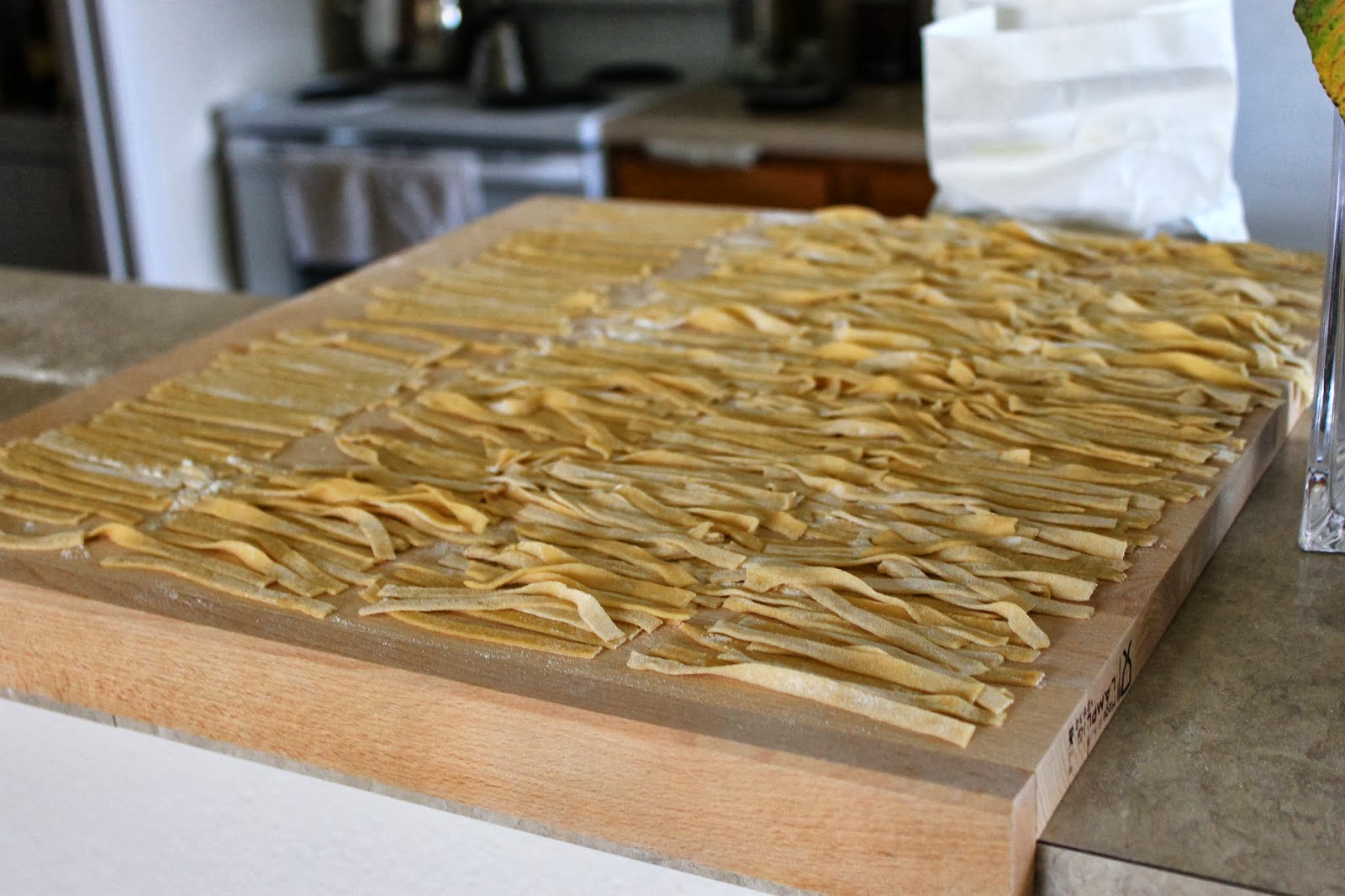
- Measure out 5 ounces of noodles for the soup using a kitchen scale (or estimate with about 3 cups of noodles), and lay them aside on a clean, dry kitchen towel until it’s time to add them to the chicken noodle soup. Lay the remaining noodles on a large cutting board and allow them to dry for several hours or overnight. When they are completely dry, you can wrap them up tightly and store them in the freezer for several months to use in future soups or pasta dinners.
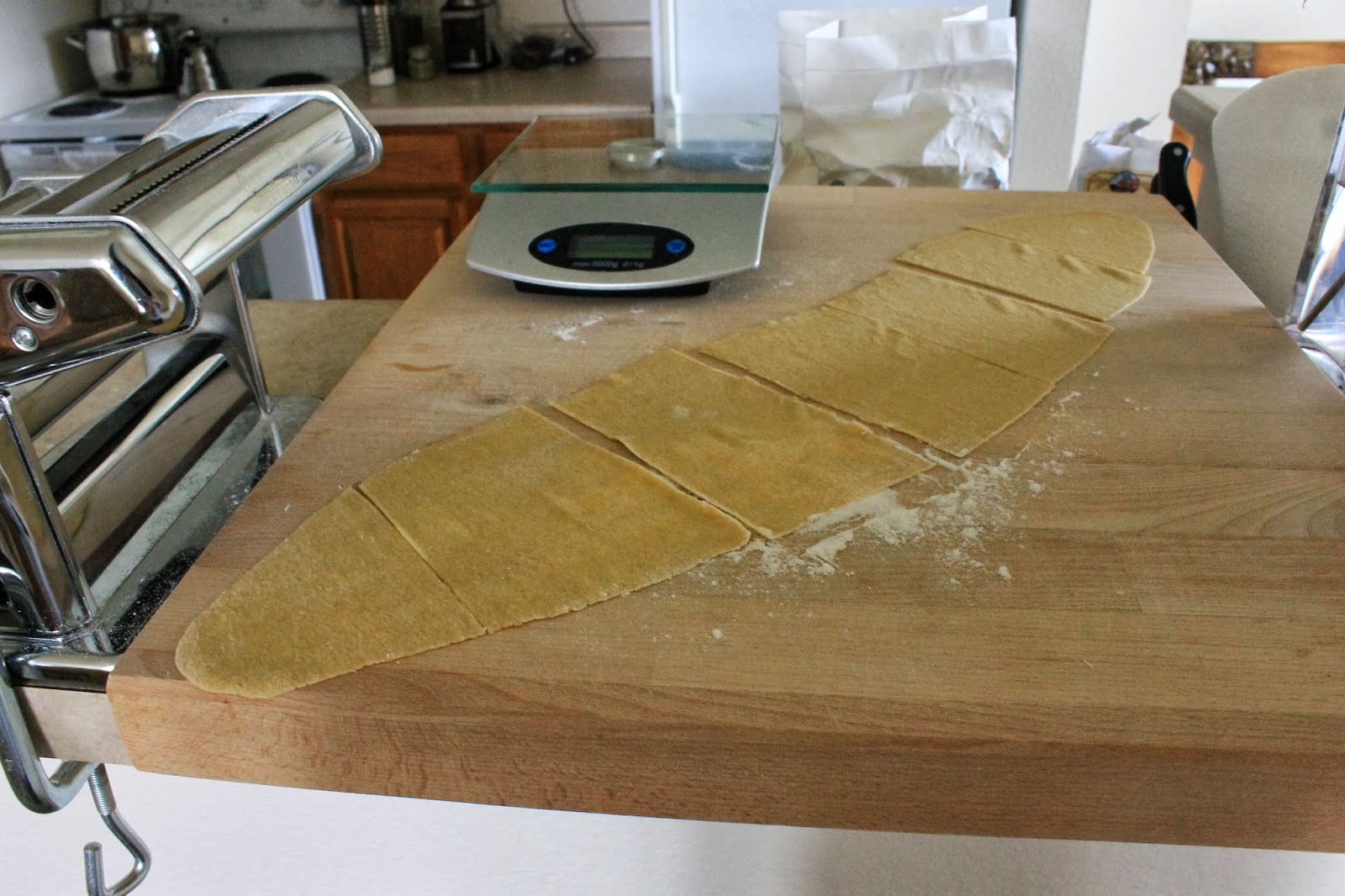 |
| Cutting the long, thin sheet of dough into 4-inch sections |
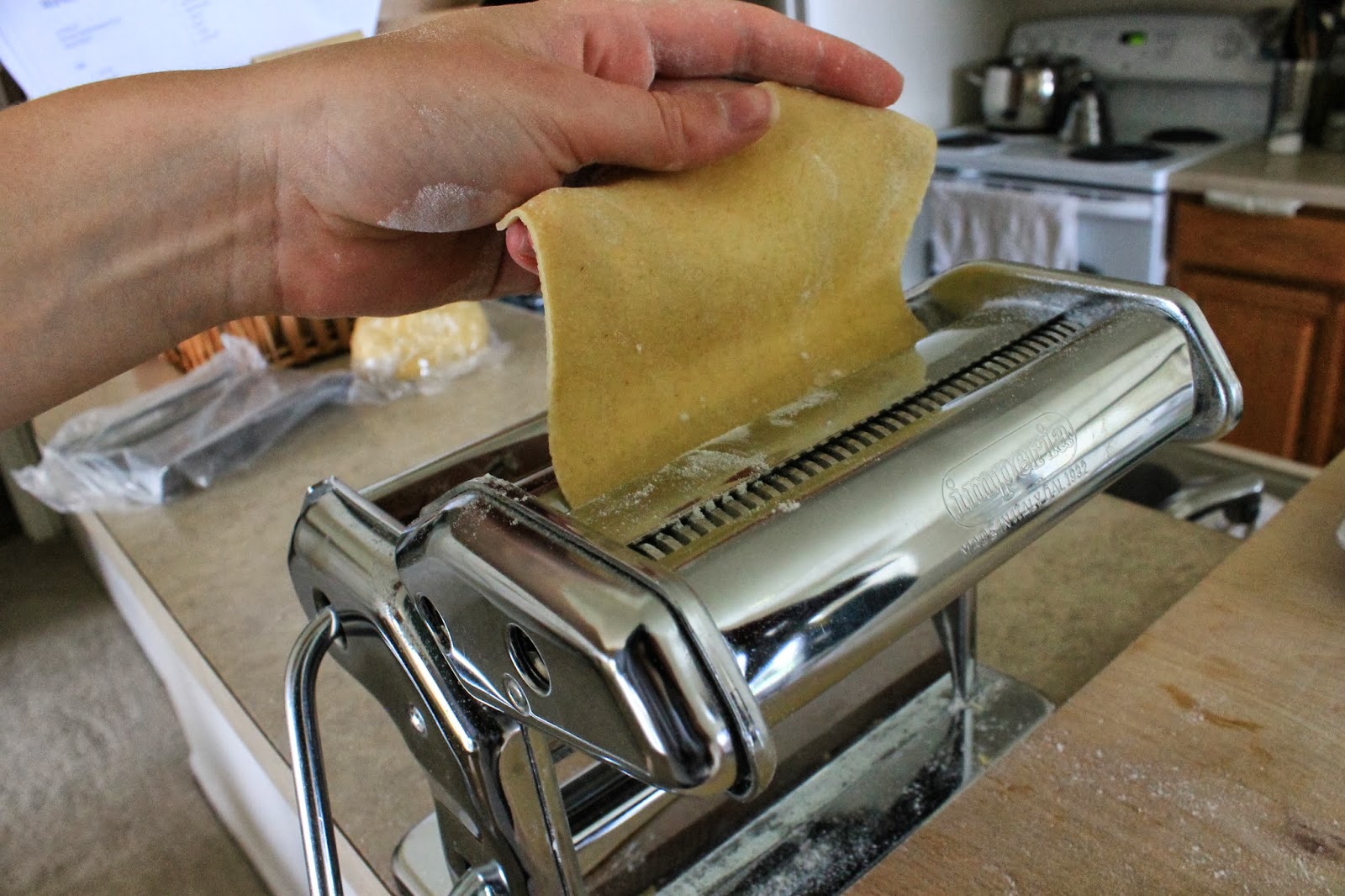 |
| Feeding one 4-inch section into the fettucini cutter |
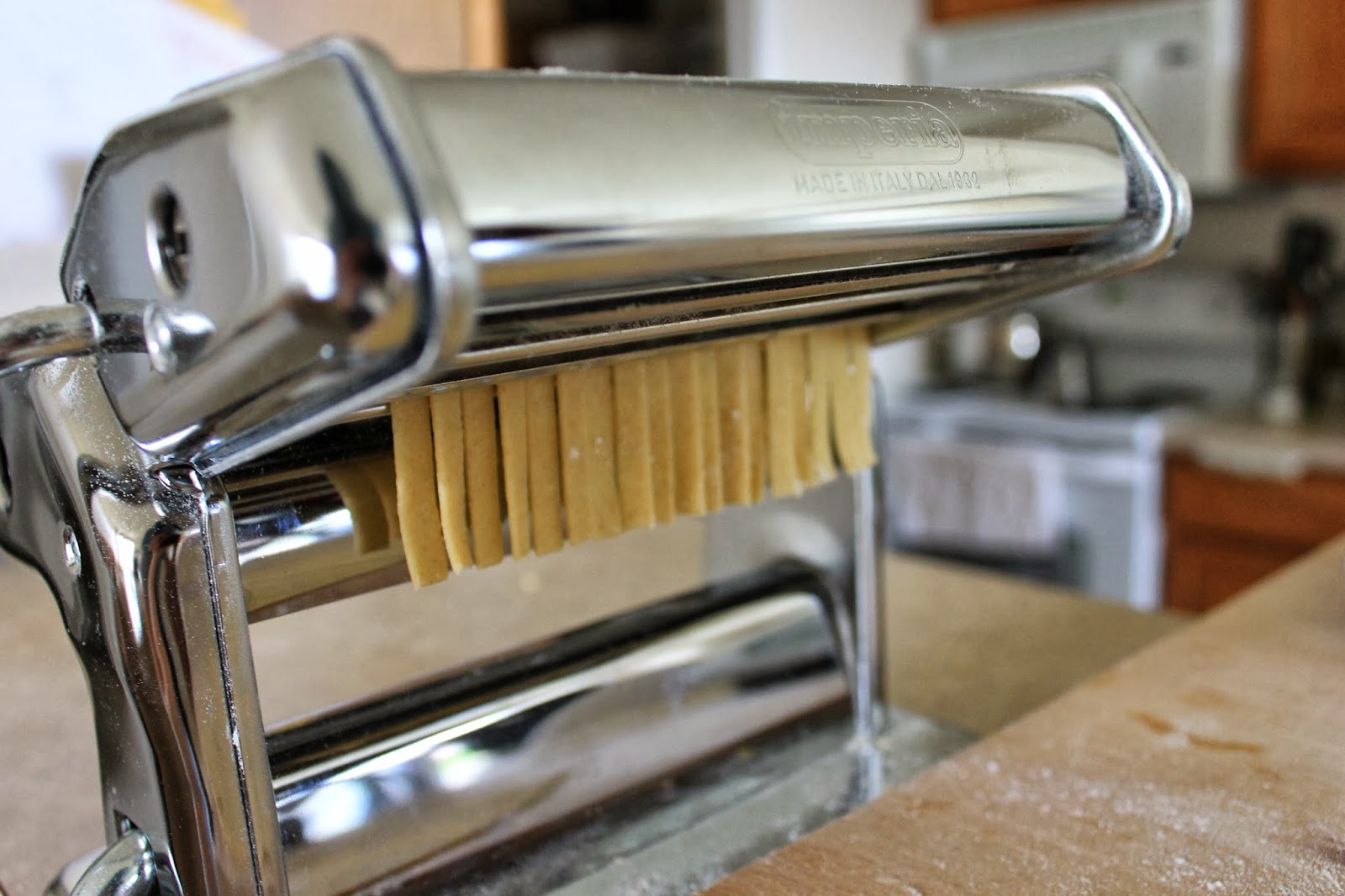 |
| Here come the noodles! |
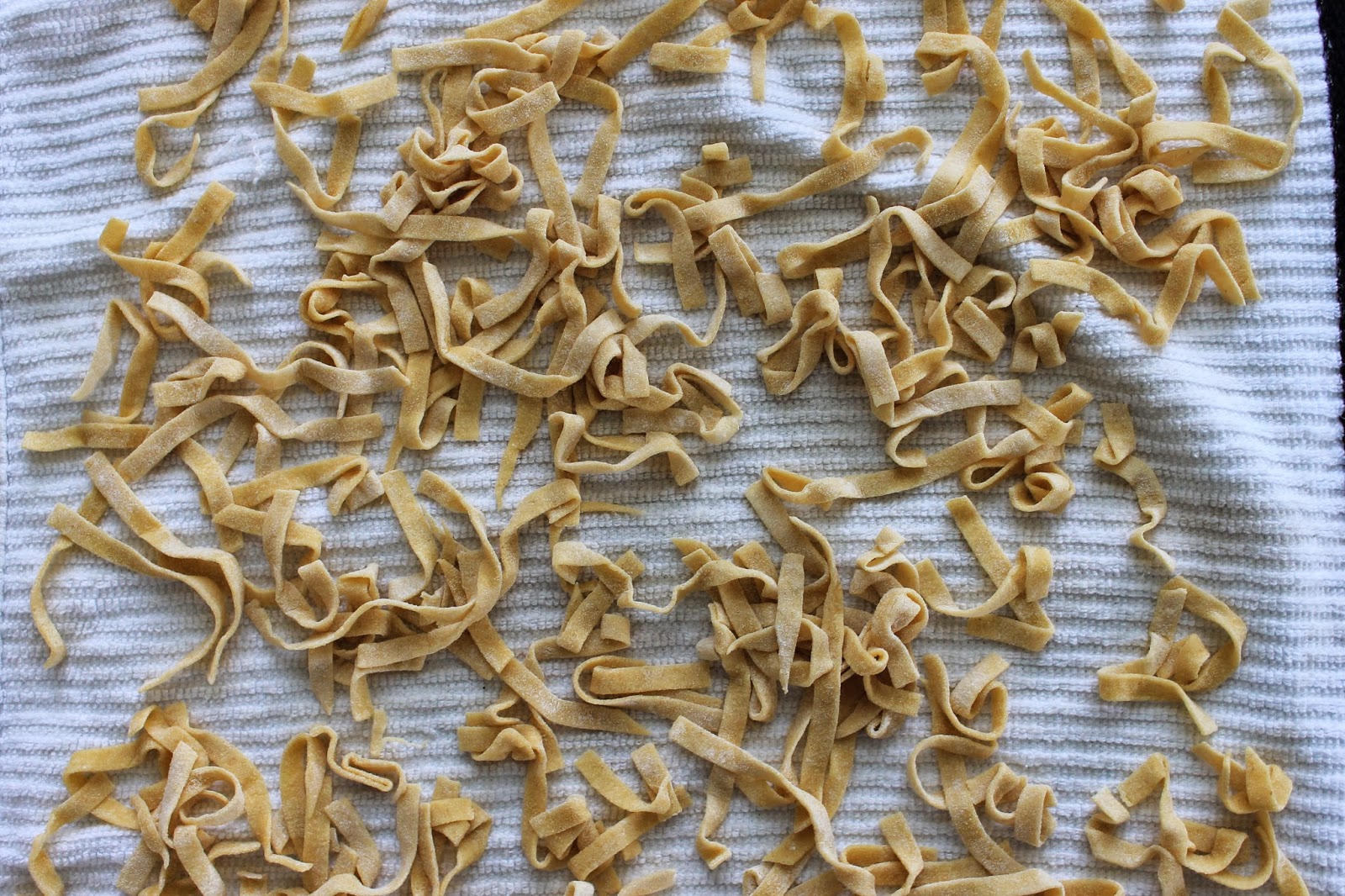 |
| Five ounces of noodles hanging out until it’s time to go in the soup |